


Production Zone 8.1 (SX 8.1)
Production Zone 8.1 (SX 8.1)
Total Land Area 109,652 m² • Starting from 3 USD/m²/month • Available from Jan, 2027
Detail Information

Total Land Area
109,652 m²

Rental Rate
3 USD/m²/month

Lease Term
3 - 10 years

Lease Move-in Date
Jan, 2027
Factory Building Specifications
Dimensions
60 x 105 m (x3)
47 x 152 m (x1)
60 x 152 m (x2)
57 x 175 m (x2)
Area
6,300 m²
7,144 m²
9,120 m²
9,975 m²
Total Quantity:
8 fatories
Detailed Planning Layout

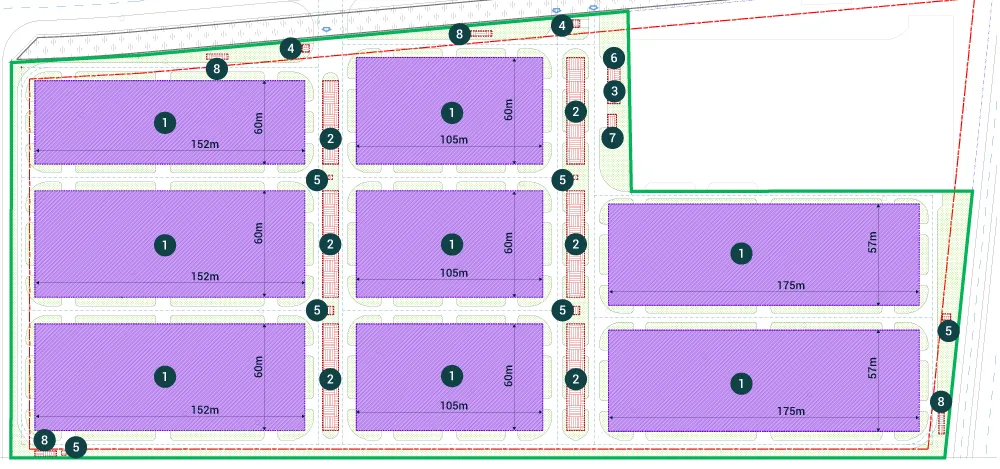
Detailed Planning for Phase I - Production Zone 8.1
Area Allocation
Factory & Auxiliary Buildings Area
67,995.1 m² (62.01%)
Roads & Pavement Area
21,808.2 m² (19.89%)
Green Landscape Area
19,848.7 m² (18.10%)
Total Land Area:
109,652 m² (100%)
Detail of Factory Buildings & Ancillary Structures

1
8 Factory Buildings
64,234 m²

2
6 Parking Areas
3,303 m²

3
1 Technical Building
175 m²

4
2 Guard Houses
32 m²

5
6 Electrical Substation
68.4 m²

6
1 Firefighting Water Tank
175 m²

7
1 Waste Storage
37.5 m²

8
4 Inverter Stations
145.2 m²
Photos of Production Zone
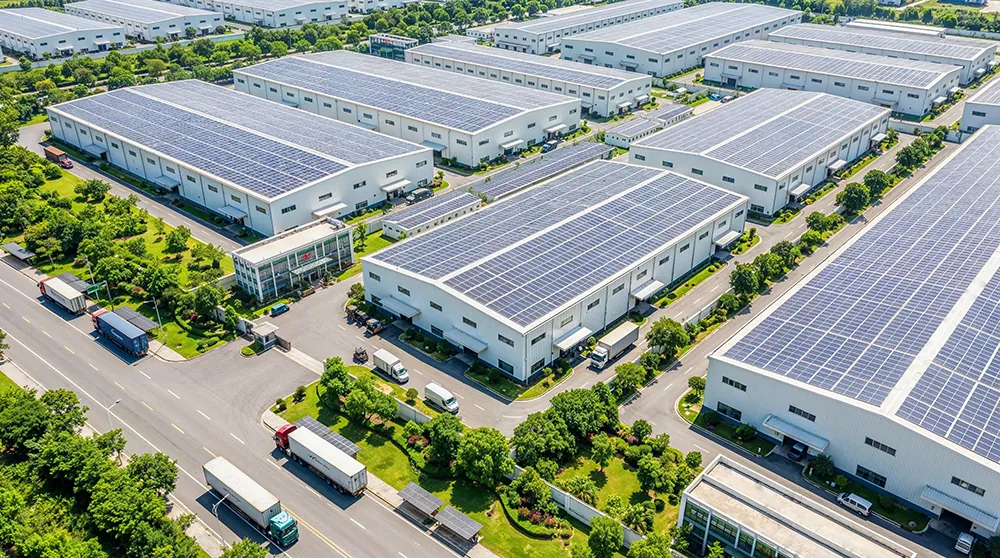
Factory Building
Overview of Production Zone 8.1
Key Features

Production Zone 8.1 comprises eight single-storey factories with a total production floor area of 64,234 m².
Four area options from 6,300 to 9,975 m² accommodate diverse production-line layout requirements.
Single-storey design creates seamless production floors, supporting efficient equipment layouts and material flows.
Integrated roads and technical infrastructure support high-volume manufacturing and efficient goods movement.
Suitable For
Large-scale manufacturers in electronics, precision engineering, components, industrial equipment, and assembly.
Manufacturers requiring multiple factories to separate production lines, stages, or product groups within one zone.
Export manufacturers handling high output and requiring efficient internal circulation.
Leading manufacturers or supplier ecosystems planning phased capacity expansion.
Key Benefits
Single-storey layouts reduce vertical handling and improve production-line efficiency.
Enables simultaneous processes and phased capacity allocation across eight factories.
Four standardized factory sizes simplify space selection and capacity allocation.
Supports on-site output expansion, reducing the need for dispersed operations.


